
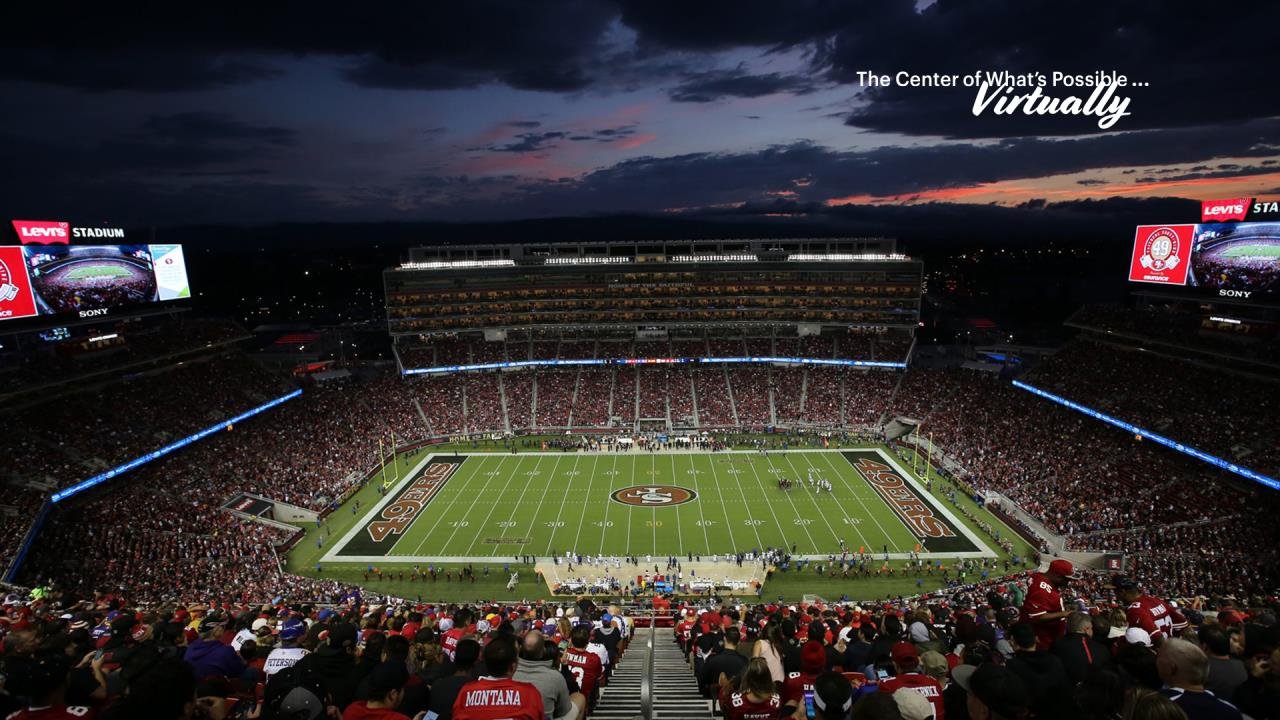
How the Santa Clara Stadium Authority Could Hand Santa Clara’s $1.3B Stadium to an $8.6 Billion Team for $0 This Year
This is not a joke.
By Dr. Thomas Shanks, PublicTrustNow, April 22, 2026.
The San Francisco 49ers are worth $8.6 billion. That is not an analyst’s estimate — it is a transaction price. In May 2025, NFL owners approved the sale of a 6.2 percent minority stake in the team for $533.2 million, implying exactly that total franchise value. The team’s revenue in the 2024 season reached $723 million — up from $680 million the year before. They lead the entire National Football League in ticket sales.
Santa Clara’s general fund has received, over the stadium’s first ten years of operation, approximately fifty-one million dollars total.
Now the same team is positioned to exercise a standing contractual option — buried in Article 5 of the Stadium Lease Agreement — that would transfer twenty-seven years of public stadium revenue to the team. And if the 49ers have managed their books the right way, the price they pay Santa Clara for that transfer is a number the lease spells out explicitly.
Zero dollars.
This is not hyperbole. It is in the contract. It is called the “Stadium Authority Put Right.” The unconditional window for its exercise opens now.
Residents should stop calling it by the lawyers’ name and start calling it what it is: the 27-year giveaway.
What Santa Clara Was Promised
When voters passed Measure J in 2010, the central promise was taxpayer protection and a long-term public revenue stream. The stadium would be built with private money. The city’s general fund would be insulated from construction risk. And beginning in Year 11 of operations, the fixed ground rent to the city would rise to one million dollars annually. On top of that, Santa Clara would receive “performance rent” — fifty percent of net income from non-NFL events — which was projected to generate millions more in subsequent years.
That was the deal. Years 1 through 10 would be heavy lifting. Years 11 and beyond would begin to return the benefits voters had been promised: funding for libraries, seniors, youth programs, and the public services that make a city function.
For twelve years, Santa Clara has done the heavy lifting.
- The Stadium Authority has paid down hundreds of millions in construction debt, years ahead of schedule.
- The city absorbed the costs of public safety overruns for NFL games — originally capped at $170,000 per game, now running several times higher.
- It watched its school district lose an estimated $2.4 million per year in property tax revenue after the 49ers won an appeal reducing their assessment to cover only six months of the year.
- It paid for three Civil Grand Jury investigations — “Unsportsmanlike Conduct” (2022), “Irreconcilable Differences” (2024), and “Outplayed” (2024). The 49er-aligned majority rejected virtually all findings of the 2022 report by 5-2 votes. They responded to the 2024 reports more carefully — acknowledging some findings while disputing others — but have been slow to implement the OUTPLAYED recommendations, with most reforms still incomplete more than a year later.
- And it watched its non-NFL event revenue — the engine of future performance rent — collapse from $6 million in fiscal year 2015-16 to nineteen thousand dollars in 2018-19 under management by a 49ers affiliate.
Year 15 was supposed to be the turn. The debt pressure easing. The reserves full. The non-NFL business generating fair market returns. The payoff residents were promised finally beginning to arrive in the general fund.
Article 5 of the Stadium Lease is the mechanism that could cancel that payoff.
What Article 5 Says
The Amended and Restated Stadium Lease Agreement, dated June 19, 2013, is a 155-page document. Article 5 occupies four pages. It is written in the language of commercial real estate contracts, which is to say it is written to obscure what it does. What it does is this:
The lease year is divided into two seasons. The “Tenant Season” is six months reserved for the 49ers’ NFL use. The “Stadium Authority Season” is the other six months, during which the Authority is supposed to book concerts, soccer matches, and other non-NFL events that generate revenue for the public.
Paragraph 5.1 gives the Stadium Authority the option to “expand the Tenant Season to consist of the entire Lease Year.” In plain English, that means the Authority can vote to hand the non-NFL half of the year — and all of its revenues, bookings, and contracts — to the 49ers, permanently, for the rest of the lease term.
Paragraph 5.1.1 makes that option unconditional between the end of Lease Year 12 and the end of Lease Year 13. Stadium operations began in August 2014. That window is open now and will close in the summer of 2027.
Paragraph 5.2.2 spells out what the 49ers receive when the option is exercised: the exclusive right to conduct non-NFL events; assignment of the Public Parking Agreement, the Stadium Naming Rights Agreement, the Concession Agreements, and “any other similar agreements or contracts pursuant to which the Stadium Authority would be entitled to Non-NFL Event Revenue.” And, in a single clause that is the fulcrum of the entire giveaway: “All Non-NFL Event Revenue shall constitute Tenant Revenue.”
Paragraph 5.2.1 spells out what the 49ers pay for this transfer. The formula is the outstanding balance of two 49ers-controlled loans to the Stadium Authority, minus the balances in three stadium reserve accounts. Then comes the sentence that changes everything: “If, as of the Tenant Season Expansion Date, there is no outstanding balance on the Management Company Revolving Loan or the Subordinated Loan, then Tenant’s Put Right Payment shall equal Zero Dollars ($0.00).”
The 49ers control the loan balances. By paying them down before the transfer date, the team can reduce its put-right payment to zero.
Paragraph 6.4 completes the picture. Today, the 49ers pay the Stadium Authority $24.5 million per year in Facility Rent. After the put right is exercised, that rent collapses to a pass-through to the city — Fixed Ground Rent (approximately one million dollars per year) plus whatever Performance-Based Rent is generated by fifty percent of non-NFL net income, as calculated by the very party that now owns the non-NFL business and sets its accounting.
The lease even anticipates how that calculation will go. Paragraph 6.4.2 defines the Performance Rent as “the greater of Zero Dollars ($0.00)” or the calculation above. The drafters left room for zero. They expected zero.
The Scale of What Is at Stake
It is worth pausing to understand what kind of counterparty the Stadium Authority is negotiating with.
The San Francisco 49ers are not a struggling franchise. According to Forbes data compiled in Statista, the team’s revenue has grown almost continuously every year since the mid-2000s. At Candlestick Park, where the 49ers played their last season in 2013, revenue peaked at $270 million. Since moving into Santa Clara’s publicly owned stadium in 2014, the team’s revenue has nearly tripled: $427 million in the first Levi’s Stadium year, $530 million by 2019, $680 million in 2023, and $723 million in 2024. In May 2025, NFL owners approved a minority stake sale that set the franchise’s total enterprise value at $8.6 billion — a 25 percent jump from the year before, and the second-highest valuation ever paid for any stake in an NFL team. The York family purchased the franchise in 1977 for $13 million. At today’s valuation, that is a return of more than six hundred times the original investment.
The team’s 2024 gate receipts alone — $176 million — led the NFL.
Here is the figure that captures the whole arrangement. In 2020, during the COVID-19 pandemic, Levi’s Stadium hosted no fans for an entire season. The 49ers had to play their final home games in Arizona. The building was dark for a year. And the 49ers’ revenue that year was $374 million — more than one hundred million dollars higher than any full season they ever played at Candlestick Park.
The franchise value also increased ten percent that year, to $4.175 billion. Forbes had estimated the team could lose $208 million in stadium revenue in 2020. The actual operating income loss was only $45.4 million.
A billion-dollar enterprise did not lose money in a pandemic year with an empty stadium. It still out-earned its own history. It got more valuable.
Meanwhile, Santa Clara’s General Fund has received, according to the 2023-24 Civil Grand Jury’s accounting, approximately $15.4 million in direct stadium payments across the first ten fiscal years of operation — a combination of Performance Rent, Fixed Ground Rent, and Senior/Youth Program fees. An additional $7.1 million in back-Performance Rent was paid in May 2024 as part of a litigation settlement. The total — approximately $22.5 million over a decade — works out to roughly one percent of the city’s annual general fund budget. The 49ers’ 2024 revenue was $723 million. The team earns, every three to four weeks, what Santa Clara’s general fund received from the stadium over ten years.1
Worse, the Grand Jury’s year-by-year data shows Performance Rent — the revenue stream Measure J promised voters would grow over time — went to zero for four consecutive years (FY 2018-19 through FY 2021-22). During the same period, the non-NFL events that were supposed to generate that rent were managed by a 49ers affiliate, and their reported net income fell from $6.1 million in FY 2015-16 to nineteen thousand dollars in FY 2018-19 to outright losses by FY 2019-20. The pipeline that was supposed to fund Santa Clara’s libraries and youth programs simply stopped delivering. The city received only the minimum fixed rent — averaging less than $600,000 per year during those four years — while litigation dragged on.
This is the imbalance the put right would lock in for another twenty-seven years.
The Pipeline: Why the 49ers Would Want the Whole Stadium
There is a second reason the put right matters, and it has nothing to do with the stadium itself. It has to do with what the 49ers have built around it.
In 2018, the 49ers and Harris Blitzer Sports & Entertainment — the investment group that owns the Philadelphia 76ers and New Jersey Devils — co-founded a company called Elevate. Elevate is a sports and entertainment consulting firm that provides, in its own description, “Consumer Insights, Research, Strategy and Analytics; Brand Consulting and Activation; Partnership Sales and Consulting; Premium Hospitality, and Ticketing Strategy and Sales; Feasibility and Revenue Consultation for New and Renovated Venues.” The company now reports serving over one thousand organizations globally.
The Chairman and Chief Executive Officer of Elevate is Al Guido, who is also the President of the San Francisco 49ers. Jed York, the 49ers’ CEO, sits on Elevate’s Board of Directors. In December 2024, Elevate added restaurant and hospitality giant Levy to its ownership group, alongside the 49ers, HBSE, Arctos Capital Partners, and Velocity Capital Management. Among Elevate’s announced partners are Oak View Group and Ticketmaster/Live Nation.
In plain English: the same corporate family that is the tenant at Levi’s Stadium owns a consulting business that sells, to other teams and venues around the world, the very services the stadium demonstrates. Premium ticketing. Venue optimization. Hospitality. Revenue strategy. The stadium is the showcase. The 49ers are the landlord’s tenant, the stadium’s manager, the operator of its non-NFL events, and the proprietor of a consulting firm that monetizes the know-how those operations produce.
The pattern has a name in business ethics: the closed loop. Revenue streams are routed through affiliated entities, expenses are booked against the public ledger, and the profits accumulate in companies the public cannot see into. Today, at least, there is an outside management agreement and some audit rights. The Grand Jury report “Outplayed” documented how inadequate those protections already are: the 49ers’ management company provided so little financial documentation that the Stadium Authority’s own auditor, J.S. Held, could not verify the accuracy of non-NFL event revenue reports for fiscal years 2015 through 2020.
Now imagine the same arrangement after the put right is exercised. The Stadium Authority no longer books non-NFL events. The 49ers do. The Stadium Authority no longer sells premium tickets. Elevate does. The Stadium Authority no longer receives non-NFL event revenue. The tenant does, and reports to the city only “fifty percent of Net Income from Non-NFL Events” — as calculated by the very closed loop whose books the city has no authority to see.
This is why the put right is not simply a financial clause. It is the gate through which a public asset moves permanently into a private revenue pipeline — one the 49ers have spent seven years building outside the reach of Santa Clara’s oversight.
Why the Timing Matters
The unconditional put-right window, under Paragraph 5.1.1, runs from the end of Lease Year 12 through the end of Lease Year 13. With the stadium having opened in August 2014, that window is open now. If the Stadium Authority Board does not act before it closes — roughly in the summer of 2027 — the Authority loses the unconditional option. It could still exercise the put right later under specific triggers (if the management company loan balance exceeds certain thresholds, or if a market rent reset is declined), but those triggers are themselves structured in ways that generally favor the tenant.
The Board is the seven members of the Santa Clara City Council. Five of them — the “49er Five” identified in Grand Jury reports — have benefited from more than $13 million in independent expenditure campaign support from the team. Those five have voted as a bloc on every major stadium-related question. They rejected virtually all findings of the 2022 “Unsportsmanlike Conduct” Grand Jury report. They fired the city manager and the city attorney who challenged the 49ers. And they will now vote, in one meeting, on whether to exercise — or deliberately fail to exercise — the single most consequential financial decision in the lifetime of the lease.
This is the ethical problem at the center of the entire Santa Clara governance crisis, rendered in a single paragraph of a single document. The same seven people are both the City Council and the Stadium Authority Board. The tenant spent $13 million helping elect five of them. And now those five will decide whether to hand the tenant twenty-seven more years of public revenue.
There is a further wrinkle in the timing. The 2023–24 Civil Grand Jury report “Outplayed” issued thirteen recommendations to the Stadium Authority to improve oversight, financial transparency, and ManCo accountability. According to the Stadium Authority’s own update letter to the Civil Grand Jury dated August 12, 2025, most of those recommendations are still incomplete: the independent economic impact study of the stadium is still being scoped; the marketing plan analysis consultant report was delayed to “late summer/early fall” 2025; the community facility recommendation has been pushed to February 2027 — after Super Bowl LX and the 2026 FIFA World Cup. Taken together, the reforms the Grand Jury identified as essential for the Stadium Authority to protect the public’s interests are quietly being rescheduled past the date by which the unconditional put-right window closes. The Authority will be asked to make its most consequential financial decision before the oversight improvements the Grand Jury demanded are in place.
Questions the Stadium Authority Must Answer
- Has the Stadium Authority Board received a formal legal and financial briefing on Article 5 and the expiring unconditional window? If so, when and in what forum? If not, why not?
- Has any independent fiscal analysis been commissioned comparing the revenue the city would receive over Lease Years 15–40 under the current structure versus the revenue projected after a put-right exercise?
- Has any Board member disclosed the 49ers’ independent expenditures supporting their campaigns as a conflict of interest with respect to any vote, discussion, or negotiation relating to the put right?
- Will the Board publicly commit that it will not exercise the put right in any manner that transfers non-NFL revenue control to the tenant without a fair market value payment to the city?
- Will the Board make all Article 5 analysis, legal correspondence, and related negotiations public before any action is taken, consistent with the Brown Act and the California Public Records Act?
The Test for Santa Clara
Measure J was written as a taxpayer protection ordinance. The city that voted for it was told, in the plainest language, that the stadium would not require or impose new or increased taxes, that the city’s general fund would be protected, and that the arrangement would generate substantial public revenue. The twelve years of construction debt service and operational turbulence were the price. Article 5 is the mechanism by which the expected payoff — Years 15 through 40 — gets transferred to the team that wrote the lease.
If the Stadium Authority Board exercises the put right in a way that the 49ers designed the lease to permit — zero payment, full transfer, twenty-seven more years of revenue diverted from the city to the team — it will be the single largest unearned transfer of public wealth to a private entity in Santa Clara’s history. It will happen in one meeting. It will be legal. And it will be the final answer to the question of whether Santa Clara city government still exists to serve its residents or exists to serve its largest tenant.
There is still time. The unconditional window is still open. The residents of Santa Clara still have a voice. The Stadium Authority Board still has to vote in public.
But the clock is running. And the lease was written in the tenant’s favor.
The Amended and Restated Stadium Lease Agreement is a public document, available on the City of Santa Clara’s website under Stadium Authority > Leases and Agreements. Article 5 appears on pages 22–25. Paragraph 6.4 appears on page 28. Readers are encouraged to verify the language quoted in this article against the primary source.
Dr. Thomas Shanks served as Santa Clara’s professional ethicist from 1998 to 2015. He is the founder of PublicTrustNow, the investigative journalism and community dialogue site of PublicEthicsNow LLC.
Footnotes
- The 49ers’ public-facing communications have claimed that Levi’s Stadium has “generated $51.6 million in lifetime revenue to the City general fund through rent, facility fees, and tax receipts.” That figure conflates direct Measure J payments with indirect economic-activity taxes — sales tax, transient occupancy tax, and possessory-interest property tax receipts — that would be generated by virtually any entertainment venue on that land and were never part of the public revenue stream voters were promised. The Civil Grand Jury’s accounting of direct Measure J payments documents only approximately $15.4 million in direct General Fund payments through FY 2023-24. ↩