
An Opportunity to Restore Trust
The forthcoming revision of Santa Clara’s City Charter offers a real opportunity to restore public trust in local governance. But one of the most glaring omissions is the Santa Clara Stadium Authority.
At the beginning of the Charter Review process, we asked during a public Charter Review Committee meeting whether the Stadium Authority would be included in the sub-committees that had just been formed. The City Attorney responded that it was excluded because it was formed by a Joint Powers Agreement (JPA) and was an entity separate and distinct from the City.
A Joint Powers Agreement makes the Stadium Authority a separate legal entity to protect the General Fund from stadium obligations, but it does not make it separate from the City’s—and the public’s—business.
An Unjustified Exclusion
The Council, the City Manager, the City Attorney and the Finance Director all serve on the Authority; they meet alongside the Council. The stadium drains time, attention and taxpayer resources for all of us—yet the Authority operates with no independent ethics code or robust charter oversight.
Now they are proposing to leave it out of the first comprehensive, “top to bottom” update of the City Charter since 1951. The draft Charter, which the Charter Review Committee presented to the City Council on June 15 mentions the word “Stadium” once, when it talked about comparable cities (“cities with stadiums’).
Excluding it from the Charter review treats one of the largest governance structures in our city as if it were outside the governance framework the City is asking taxpayers to approve. The Stadium Authority is also not included in the draft ethics replacement code for the seven members of the City Council nor in the study of the independent ethics commission. Yet the Stadium Authority has the contractual right to decide whether the City will transfer full-year operational control of the Stadium to the 49ers (the Stadium “put right.”
Why the JPA Exclusion Argument Sounds Like an Excuse
Yes, Joint Powers Authorities are legally distinct entities created under California’s Government Code §6500 et seq. But the existence of a JPA does not automatically insulate the City from oversight when the JPA affects the City’s finances, decision-making, budget risks, and public trust.
The Authority’s decisions on stadium contracts, vendor deals, and public-private arrangements significantly affect the City’s governance and operations—yet the Charter review is being framed as if those decisions operate in a separate and distinct world and have no impact on the public’s trust that their government puts the people’s needs and best interests above all others.
Leaving the Authority out signals: “We will reform governance—except where it matters most.” It also signals, “Everything else about Santa Clara government is on the table–except where it involves the 49ers.”
A Central Role, Not a Side Issue
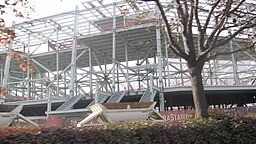
The SCSA owns and operates Levi’s Stadium and its financial, contractual, and political impact on the city is profound. The proposed Charter describes the roles of the Mayor and Council, City Manager, Attorney, and Finance Director without also including their roles and duties as members of the Stadium Authority.
There is no footnote, nothing to indicate that the roles explained in the draft Charter are incomplete. It raises the question of how the City can claim the City Charter describes how the City is governed today without any mention of the Stadium Authority? Will the City actually ask voters to approve to approve a governance document that ignores a key decision-making body which involves all the City’s key decision-makers, requires a great deal of City work, and involves million of dollars.
What the City Charter Must Include
- An explicit section or addendum: The Charter must either include the Authority directly, or adopt a formal addendum linking the Authority to the City’s governance structure, ethical standards, conflicts-of-interest safeguards, and oversight.
- Cross-Reference Integration: Charter articles on Council, the City Manager, boards/commissions, city finances or public meetings must reference how the Authority fits into or interacts with those systems. It is particularly important to talk about what happens when the roles of one conflict with the roles of the other.
- Minimum Oversight Standards: Though the Authority is a JPA, the Charter should require that the City’s membership in it meet the same ethics, transparency and disclosure standards as the rest of the City—at minimum as a condition of City participation.
- The Independent Ethics Commission: The Charter Review Committee considered including an independent ethics commission, as the 2022 and 2024 Civil Grand Juries recommended. After rejecting it twice in 2022, the Council approved the Commission in its official response to Irreconcilable Differences. Despite that, the Charter Review Committee decided it was premature (because the Governance & Ethics Committee discussed in on January 16, 2026 and no one has mentioned it publicly since. The Committee also decided it was too controversial and listed it as a level 4 “sometime in the future” decision.
- Charter-level Ethics Protections and Infrastructure: While the case can be made against an Independent Ethics Commission, no case can be made for failures to provide Charter-level protections for an ethics infrastructure, to protect meaningful public engagement and input, and to commit the City to an ongoing duty to protect public trust. The only mention of ethics is to commit the City to the two hour training the State requires every other year in ethics laws and to note that conflict of interest provisions, consistent with State law, would be followed.
- Transparency & Accountability Mechanisms: The Charter should build in audit requirements, public disclosures of contracts, vendor relationships, stadium revenue-share deals and governance minutes, treated as part of the City’s framework—not as a “special case.”
- Continuity & Institutionalisation: The ethics and oversight regime must be anchored in the Charter, not reliant on any one champion or Council majority. If the Authority’s role is excluded, future oversight becomes discretionary, not required.
Tests for Voters
- If the final Charter revision arrives without mention of the Stadium Authority’s role, structure, and oversight, then voters are being asked to approve governance that fails to reflect the full reality of municipal decision-making. Given the scale of the stadium enterprise, the money involved, the politics around it, and the ethics questions that have arisen—this is simply unacceptable.
- If the Charter fails to mention a requirement for public officials to act in the best interests of the public, it is a failure of the Charter to embed the fiduciary duties of City officials–the highest duties the law recognizes. These are the duty of:
- Care (to apply professional best practices in whatever application the City needs.
- Care (to apply professional best practices in whatever application the City needs.
The Charter Is the Foundation of Public Trust
When we build municipal trust, we cannot leave the biggest resource and the biggest risk off the table. If ethics, oversight, and public trust must underpin governance, then the Charter review must account for every major governance entity—including the Stadium Authority.
Join the conversation
Reading is open to everyone — no account needed. To comment on this article or share your own perspective, become a Public Trust Partner and sign in to the portal.
Join Public Trust Partners →