

A Case Study: Should the City Keep or Eliminate Senior Center Fees?
At the June 23, 2026 City Council meeting, several residents asked the Council to eliminate the fees seniors pay to use the Senior Center.
Suppose you were a Council member. How would you make the decision?
Where Do I Begin?
The first step in Public Trust Decision-Making is to clarify the question.
The decision-making body needs to be sure everyone is answering the same question. It is one question to ask: “Should the City eliminate Senior Center fees or keep them for the 2026-2027 fiscal year?” It is a very different question to ask whether the City should eliminate those fees for five years, ten years, or permanently.
Staff might ask the Council for direction on the time period. Or, depending on the Council’s fee policy, budget priorities, and other factors residents may not yet understand, staff may recommend the appropriate time period as part of its report.
For this case study, let’s assume the question before the Council is:
Should the Council keep the Senior Center fees for the 2026-2027 fiscal year, or eliminate them?
Let’s also assume the Council has placed that question on the agenda for a future meeting.
Staff would then begin preparing for the Council to have an informed discussion, listen to the public, and make a decision.
Without question, staff would be prepared to discuss whether each option is:
- Legal — Does the law allow each option? Are there any legal restrictions?
- Financially responsible — What would each option cost? What are the trade-offs? Are there existing funding sources that could offset some or all of those costs?
During the June 23 discussion, Council Member Suds Jain asked an important question: What happens to the more than $300,000 the City receives annually from the 49ers for senior and youth programs? Could some or all of those funds be used to offset Senior Center fees or otherwise address the concerns residents raised? Before making a decision, the Council and the public deserve a clear answer. The answer may not change the decision—but it could expand the range of options available. - Technically feasible — Can the City successfully implement each option?
- Operationally practical — What would staff need to do to administer each option?
- Consistent with Council policy — Does each option align with the Council’s adopted fee policies, budget priorities, and service objectives?
- Likely to achieve its intended purpose — How well is each option likely to achieve the Council’s objectives? (Early on, the Council will have discussed what its objectives are.)
- Politically achievable — Is there sufficient support to adopt and sustain the decision?
Every one of these dimensions deserves careful attention. Leaving any one of them out of the decision-making process raises legitimate questions about whether the community has made the best decision it could.
If the Council carefully considers all of these questions, has it done everything necessary to make the best possible decision?
Not yet.
Every important public decision has one additional dimension that is rarely discussed explicitly but may be just as important as all the others.
Every important public decision also has an ethics and public trust dimension.
This decision affects seniors living on fixed incomes, the City’s responsibility to use public resources wisely, the competing needs of other residents, fairness, how the City cares for and responds to seniors, and ultimately the kind of community Santa Clara wants to become.
Those considerations lead to one more question—one that deserves the same careful attention as every other dimension of the decision:
What is the ethics quality of each option we are considering?
What is Ethics Quality?
Every important public decision has an ethics dimension because every important decision will strengthen or weaken the City’s quality of life.
The ethics quality of a public decision is the extent to which the decision-making process and the final decision fulfill government’s ethics and public trust responsibilities.
High-quality public decisions begin where legal compliance ends.
They are the result of a disciplined decision-making process that helps public officials:
- Understand all the dimensions of the issues and the decision.
- Identify the ethics and public trust values at stake.
- Consider those most affected short term and long term.
- Develop stronger options.
- Evaluate those options against well-grounded ethics and public trust standards.
- Explain the full reasoning behind the decision.
- Choose the course of action that best serves the people while fulfilling government’s fiduciary duties.
The Standards of High Ethics Quality
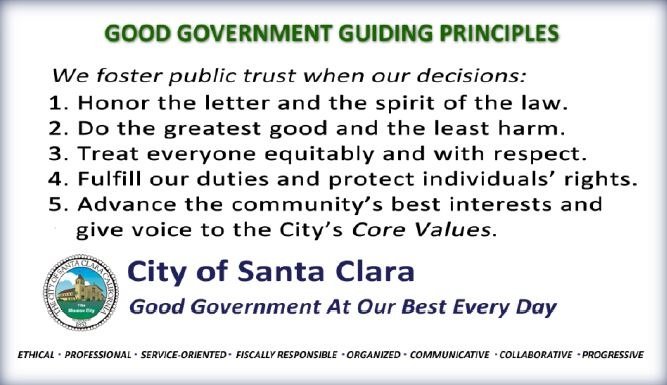
How do we evaluate the ethics quality of a public decision?
At Public Trust Now, we believe every important public decision should be evaluated against the Good Government Guiding Principles. Together, they describe what ethical leadership and trustworthy governance look like at their best.
High ethics quality means striving to make decisions that:
- Honor the letter and spirit of the law.
- Align actions with the City’s core values.
- Do more good than harm while reducing harm whenever possible.
- Treat people in similar circumstances similarly unless there is a good public reason to do otherwise.
- Protect people’s legal and ethical rights.
- Fulfill government’s fiduciary duties to the public.
- Advance the community’s best interests rather than personal, private, or special interests.
- Build the public’s trust that government puts the people’s needs and best interests ahead of every other relationship, interest, or consideration.
Rarely does the first option under consideration satisfy every one of these principles. That is why ethics is not simply about choosing among the available options. It is about improving them.
Join the conversation
Reading is open to everyone — no account needed. To comment on this article or share your own perspective, become a Public Trust Partner and sign in to the portal.
Join Public Trust Partners →